




Many people assume that if they’ve been without teeth for a long time, they may no longer be candidates for implants, being that the jawbone tends to shrink and weaken when teeth are missing.
However, thanks to advancements in dental technology, it’s entirely possible to receive dental implants even after years of missing teeth.
In this post, we’ll explore why the timing of your tooth loss matters, what makes you a good candidate for implants, and how the process works.
How the length of time without teeth affects your eligibility for dental implants
When a tooth is lost, the jawbone in the affected area may begin to deteriorate or shrink over time. Bone resorption happens because the bone no longer has the stimulation from the tooth root, which would normally help maintain its strength and volume.
For a dental implant to be successful, it requires a healthy and sufficient amount of jawbone to properly support the implant. The jawbone acts as the foundation for the implant, providing the necessary stability and support as it integrates with the surrounding bone through a process known as osseointegration.
If there is insufficient bone volume or density, the implant may not properly fuse with the bone, leading to potential instability or failure of the implant.
Is it possible to get implants if you’ve had missing teeth for years?
Yes! In such cases, procedures like bone grafting and sinus lifts are commonly recommended to restore the bone structure and create a solid foundation for the implant.
Bone grafting involves adding bone material, either from your own body, a donor, or synthetic sources, to the areas where bone volume is lacking. This procedure encourages new bone growth and helps to rebuild the area for proper implant placement.
Similarly, a sinus lift is a procedure used when there is insufficient bone in the upper jaw, particularly in the area of the molars and premolars, where the sinuses are located. By lifting the sinus floor and adding bone material, this procedure creates more space for the implant to be successfully placed.
Both bone grafts and sinus lifts are well-established techniques in modern dentistry and have a high success rate. These procedures not only restore the necessary bone volume but also enhance the overall stability and longevity of dental implants.
Once the bone has adequately healed and integrated with the grafted material, implants can be placed securely.
Are you a candidate for dental implants after years of missing teeth?
Several factors determine whether you are a good candidate for dental implants after missing teeth for a long time. These include:
– Sufficient healthy jaw bone
Bone health plays a crucial role in the success of dental implants, as the implants rely on strong, healthy bone to properly integrate and remain stable over time.
If bone density has been compromised, a bone graft and/or sinus lift may be necessary.
– Good dental health
Healthy gums are also important for the success and longevity of dental implants as they provide the necessary support and protection for the implant. The gums serve as the soft tissue surrounding the implant site, ensuring that the implant remains stable and free from infection.
If the gums are compromised—whether due to gum disease, recession, or inflammation—this can affect the implant’s ability to properly integrate with the jawbone and may increase the risk of complications.
In cases where the gums are not in optimal condition, procedures like scaling and root planing to treat gum disease or gum grafts to restore lost gum tissue and improve coverage around the implant site may be needed.
– Good overall health
Your general health is another important factor in determining whether the implant procedure will be successful. Conditions such as diabetes, smoking habits, and your body’s ability to heal effectively can influence the outcome of the implant process.
For example, individuals with uncontrolled diabetes may experience delayed healing, which could impact the integration of the implant with the bone. Smoking, on the other hand, can reduce blood flow to the gums, increasing the risk of infection and slowing down the healing process.
Therefore, it is essential to discuss any pre-existing medical conditions with your dentist.
During your consultation at Kootenai Dental Group in Coeur d’Alene, ID, Dr.Delwyn Dick, DDS, will conduct a comprehensive evaluation, taking into account your medical history and current health status, to ensure the best possible outcome.
If you are in good overall health and are willing to take the necessary steps to care for your oral hygiene, there is a strong likelihood that you will be an excellent candidate for dental implants.
What is the implant process like for people with long-term tooth loss?
The dental implant process for people who have been missing teeth for a long time typically includes the following steps:
1. Consultation and evaluation
The first step is a thorough consultation with Dr. Delwyn Dick, DDS, during which your jawbone, gums, and overall health will be carefully assessed. A personalized treatment plan will be developed based on your specific needs and goals.
This includes discussing any additional procedures that may be required, such as bone grafting to restore lost bone volume or treatments to address gum health if your gums are compromised.
2. Dental health treatments
If bone grafting, a sinus lift, or any other treatments are required, those procedures will be completed first, followed by a period of healing.
3. Implant placement
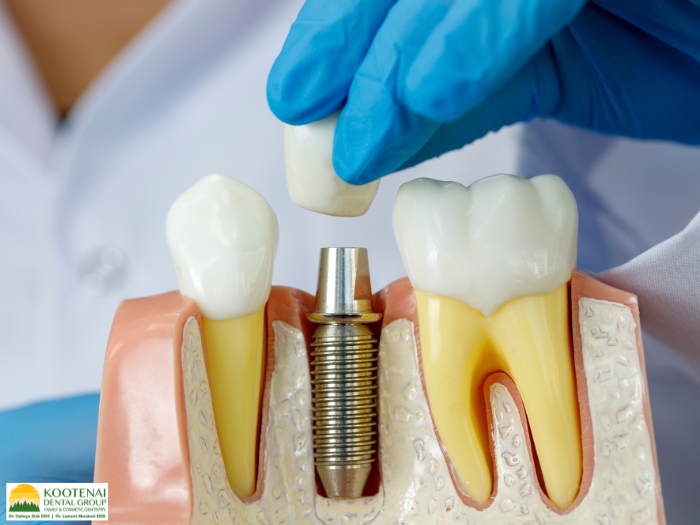
Once your mouth is ready for the implant procedure, the next step involves the placement of the implant post. This post, typically made from titanium, serves as a replacement for the tooth root and is inserted into the jawbone.
The implant placement itself is minimally invasive and usually performed under local anesthesia to ensure comfort during the procedure.
4. Healing and osseointegration
After the implant post is placed, the body will begin the process of osseointegration, where the bone gradually fuses with the titanium post.
This step typically takes several months and is essential for the implant to achieve a stable, long-lasting foundation. During this period, it is important to follow post-operative care instructions to ensure proper healing and minimize the risk of infection.
Dr. Delwyn Dick, DDS, will schedule follow-up visits to monitor your progress during this time.
5. Attaching the crown
Once the implant has fully integrated with the bone, a custom-made crown will be made to match the shape, size, and color of your natural teeth. The crown is securely attached to the implant post, restoring both the functionality and aesthetics of the missing tooth.
How long does it take to get dental implants?
The entire implant process, from the initial consultation to the final placement of the crown, typically takes several months to over a year, depending on the individual’s specific condition and the need for preparatory procedures.
If you need bone grafting, a sinus lift, or other preparatory procedures, a healing period of several months is usually required to allow for optimal bone and gum health to be achieved before the implant post is placed.
Once the implant is inserted, an additional period of healing takes place. During this time, the bone fuses with the titanium post, providing a solid foundation for the final restoration.
After the implant has fully integrated, the crown will be placed to complete the procedure.
While the process may take time, it is important to understand that this timeline is necessary to ensure the success and longevity of the implants.
Bottom line
If you’ve been missing teeth for a while, dental implants may be a great solution. Thanks to advancements in dental technology, even those who have been without teeth for years can benefit from implants.
To learn more about dental implants and whether you’re a candidate, call 208-762-8750 and schedule your free consultation with Dr. Delwyn Dick, DDS, today.
Frequently Asked Questions
How long can you wait to get a dental implant after losing a tooth?
Ideally, dental implants should be placed immediately or soon after a tooth is lost, as this helps to prevent bone resorption and the deterioration of the surrounding tissues. When a tooth is lost, the jawbone can lose volume and density quickly due to the lack of stimulation from the tooth root.
This can complicate the placement of dental implants if left untreated for an extended period. However, thanks to advancements in dental technology, it is now possible to successfully place implants even after years of tooth loss. In some cases, additional treatments may be required prior to implant placement to ensure sufficient gum and bone stability.
Will my implant feel natural after so long without teeth?
Yes! Dental implants are specifically designed to replicate the form and function of natural teeth.
The crown placed on the implant is custom-made to match the shape, size, and color of the patient’s natural teeth, ensuring that it blends seamlessly with the surrounding teeth. As a result, once the implant has fully integrated with the bone and the crown is attached, it should feel and function just like a natural tooth.
Even after a long period without teeth, patients can expect the implant to provide the same level of comfort and functionality as their original teeth.