




Dental veneers are thin, custom-made shells of tooth-colored materials designed to cover the front surface of teeth in order to improve their appearance. They are permanently bonded to the front of teeth, effectively transforming their color, shape, size, and/or length.
Veneers serve both cosmetic and functional purposes. They offer a relatively quick and minimally invasive way to significantly transform a person’s smile by masking a variety of dental imperfections while also providing a layer of protection to the tooth’s surface.
In this article, we will discuss all the things you need to know before making your decision to get veneers.
Which issues can dental veneers fix?
Veneers can resolve both aesthetic and functional dental issues, such as:
– Discoloration
Stubborn tooth discoloration that doesn’t respond to traditional whitening treatments can be effectively covered with veneers. This includes intrinsic stains, as well as stains from large resin fillings and root canal treatments.
Veneers provide a uniform, bright color that can dramatically enhance your smile.
– Worn teeth
Years of bruxism (grinding your teeth), eating acidic foods, or aggressive brushing can lead to worn-down teeth. Veneers are a great solution for restoring the original length and shape of your teeth.
– Chips and cracks
Small chips or cracks in teeth can be easily covered and disguised with veneers. Not only do they improve their overall appearance, but more importantly, they protect the damaged tooth from further wear and decay.
– Small gaps between the teeth
Small gaps between the teeth can be closed using veneers. This provides a more uniform smile without the need for braces or other similar orthodontic treatments.
– Minor misalignments
Veneers can hide the appearance of slightly crooked teeth by making them look straight, however, significant misalignments may require other treatments.
Things to consider before getting veneers
Before committing to veneers, there are a few things you should know, such as the types of veneers that are available, what the overall procedure entails, their expected durability and the factors that affect their durability, and most importantly, how to select a qualified dentist to perform this treatment.
– Types of veneers
There are two types of materials that can be used when making veneers: porcelain and composite resin.
Porcelain veneers
In terms of quality and durability, porcelain veneers are the best option. They offer a natural, translucent appearance that perfectly mimics real teeth, they resist stains well, and they can last well over 20 years with proper care. The only downside is that they’re more expensive when compared to their counterpart, composite veneers.
Composite veneers
Composite resin veneers are more affordable than porcelain and can oftentimes be applied within a single visit. Even though they are more prone to wear, staining, and have a shorter lifespan than porcelain veneers, they’re easier to repair if damaged.
This is only an overview of the types of veneers available, however, in this article, you can learn about the differences between porcelain and composite veneers in greater detail.
– Full vs partial veneer treatment options
Depending on your oral health needs, smile goals, and budget, you can opt for partial or full veneers.
Full veneer placement will give you a complete smile makeover as it involves applying veneers to the surface of all your teeth.
Partial veneers, on the other hand, are applied to select teeth, generally the ones most noticeable when you smile.
– Permanence and reversibility
It’s crucial to understand that getting veneers is typically a permanent decision. Since the process requires removing a thin layer of enamel, you will need to have your veneers maintained and replaced at the appropriate times.
– Durability and longevity of dental veneers
The lifespan of veneers depends on several factors, including the material they are made from, your diet and dental hygiene routine, conditions like teeth grinding and oral diseases, and how often you go to the dentist for regular check-ups and professional cleanings.
When properly maintained and cared for, porcelain veneers can last 20 years or more. Composite resin veneers usually last up to 7 years.
– Customization and aesthetics
Veneers offer a high degree of customization, such as shade selection to match your natural teeth or achieve your desired whiteness, shape and size adjustments to complement your facial features, and mimicking the texture to make them feel just like natural teeth.
– The dental veneer procedure
Understanding what you can expect during the veneer procedure can alleviate any fears you may have about this treatment and help prepare you for the process.
In most cases, veneer placement consists of only three appointments at the dentist’s office.
- The initial consultation and planning
- Tooth preparation and temporary veneer placement, and
- The final installation of the permanent veneers
1. Initial consultation
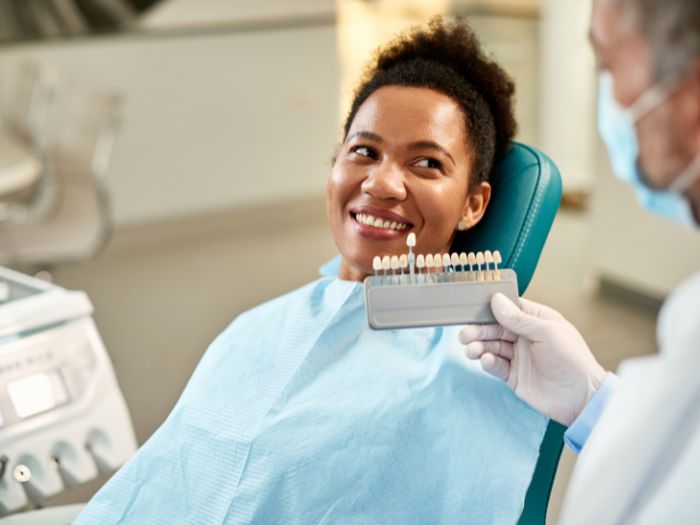
The process begins with a comprehensive consultation in which the dentist will thoroughly examine your teeth and oral health, discuss the procedure, and prepare a treatment plan including shade selection.
You can rest assured that during your consultation at Kootenai Dental Group in Coeur d’Alene, ID, Dr. Delwyn Dick, DDS will address all of your concerns and help you make the best-informed decision in order to meet your aesthetic and functional dental needs.
2. Tooth preparation and temporary veneers
At this stage, a thin layer of enamel is removed from the tooth surface. This reshaping is essential for the veneers to bond correctly. To ensure you don’t feel pain, local anesthesia will be used.
Once that’s done, temporary veneers will be applied to protect your teeth while the permanent ones are being made. These temporary veneers will be removed and replaced with the permanent ones at your final appointment.
3. Permanent veneer placement
During the last step, your temporary veneers will be removed. Then, your teeth will be thoroughly cleaned and their surface will be etched to create a strong bonding area.
Finally, your veneers will be attached with a special adhesive and then polished. Adjustments will be performed to guarantee your bite feels comfortable.
– What to expect post-procedure
The average healing time after veneers varies from person to person however immediately following the procedure, some patients experience temporary sensitivity to hot and cold, increased salivation, mild discomfort, gum irritation, and slight speech difficulties.
These symptoms should only last a few days to a week, however, if they don’t subside, contact your dentist for a follow-up.
– Personal and professional maintenance required
To maintain the longevity of your veneers, you should brush your teeth with a non-abrasive toothpaste at least twice a day, floss daily, and wear a dental guard if you tend to clench or grind your teeth.
Also, do not bite on hard objects and avoid highly pigmented foods and drinks that can cause staining.
You should also schedule routine dental check-ups and professional cleanings twice a year. Regular visits to the dentist will ensure that any oral health conditions that arise are taken care of promptly and will extend the life of your veneers.
Who is an ideal candidate for veneers?
You’re an ideal candidate for dental veneers if you:
- Have healthy teeth and gums
- Want to enhance and brighten your smile
- Are committed to good oral hygiene practices
You may not be a suitable candidate for veneers if you have:
- Severe gum disease
- Significant tooth decay
- Large dental fillings
- Severe bruxism habits
- Insufficient enamel for bonding
Are there alternatives to veneers?
While veneers offer an excellent solution for many dental issues, they’re not the only option available.
To combat tooth discoloration, you can also consider professional whitening treatments. The patients who use the at-home whitening kits we offer at Kootenai Dental Group in Coeur d’Alene, ID see significant improvements in reducing extrinsic stains.
To address small chips or gaps, you could also consider dental bonding. This is a less invasive procedure, although not as durable, in which tooth-colored resin is applied and shaped to improve the tooth’s appearance.
For misalignment or spacing issues, you could also consider traditional braces or clear aligners to straighten teeth.
Choosing the right dentist
The success of your veneers largely depends on the skill and expertise of the dentist performing the procedure. In this article, you will learn which qualifications you should look for in a dentist to perform cosmetic dental treatments.
With over 25 years of experience, Dr. Delwyn Dick, DDS is a specialist in cosmetic dentistry.
Whether you’re considering veneers or any other dental treatment, we are here to guide you every step of the way.
Call 208-762-8750 to schedule your free consultation today!