




Dental implants have transformed modern dentistry, offering a permanent solution to replacing missing teeth and restoring oral function and appearance.
Despite their numerous benefits, many people are concerned about the potential pain associated with the dental implant procedure.
The good news is that dental implants are not painful.
While slight discomfort is possible during the placement process, thanks to anesthesia and advancements in implant dentistry, the overall procedure will not cause significant pain.
In this article, we will address common concerns about the dental implant procedure and give you insights into the experience so that you know what to expect in terms of pain.
What is the procedure of getting dental implants?
Getting dental implants typically involves several steps:
1. Initial consultation: During your free consultation, you’ll meet with one of our dental specialists for an examination and discussion about your dental history, oral health, and treatment options. If you’re a good candidate for implants, we’ll continue with the next steps.
2. Treatment planning: Using X-rays and impressions of your natural teeth and gums, we will create a customized treatment plan for you.
3. Preparation: If your jaw does not provide a strong foundation to support implants, bone grafting may be necessary.
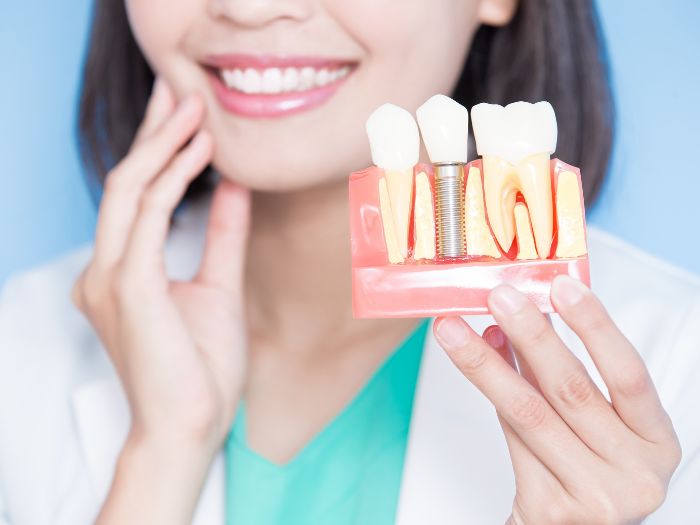
4. Placement: If you have any damaged or decayed teeth that need removal, they’ll typically be extracted on the same day as the implant placement. During the implant placement, a tiny screw (titanium post) is placed into the jaw bone beneath the gum line. This requires precision and may involve local or general anesthesia depending on the complexity of the procedure.
5. Recovery process: After the placement is complete, the healing phase begins. During a period of several months, osseointegration will occur. Osseointegration means that the metal post will fuse to the surrounding jawbone.
6. Abutment placement: Once the jawbone has healed, small connector posts (abutments) will be attached to the top of the titanium post. These will serve as anchors for the artificial teeth.
7. Final restoration: After the gums have healed around the abutments, impressions are taken to create the final artificial teeth (crowns, bridges, or dentures). These prosthetic teeth will eventually be attached to the abutments, completing the dental implant process.
8. Follow-up care: Regular follow-up appointments with our cosmetic dentists are important to make sure that the implants are functioning properly and to promptly address any issues that may arise.
The only time throughout the entire process where you may experience discomfort is during the preparation, implant placement, and the first few days of healing following the procedure.
Is it painful to get dental implants?
The thought of undergoing any dental treatment can trigger anxiety, especially when it comes to the potential for pain and discomfort. However, it’s important to differentiate between discomfort and pain when discussing dental implants.
While you may experience minor discomfort during the procedure, particularly during the initial numbing process, the actual sensation of pain is typically minor.
A local anesthetic will be administered around the implant site in order to desensitize the area completely, but it’s possible to feel a bit of pressure.
As before mentioned, the implant is placed within the jawbone. The jawbone itself lacks nerve endings, which means that it’s actually impossible to feel pain there. As a result, any sensation you feel during the placement will be around the gums, and being that they’ll be numb, the likelihood of pain will be minimal.
After the procedure is complete, the dentist may prescribe you over-the-counter medication to reduce swelling, speed up your healing time, and decrease any associated discomfort.
As with any dental procedure, our priority at Kootenai Dental Group in Coeur d’Alene, ID is to ensure that our patients are comfortable before, during, and after their restorative dental treatments.
Our team of experts have over 25 years of experience in cosmetic dentistry. With Dr. Delwyn Dick, DDS, and Dr. Miranda Anderson, DDS, you can confidently take the step towards achieving the beautiful smile you deserve and undergo dental implant placement with minimal discomfort.
How long does the pain last after dental implants?
Due to the nature of the procedure and the swelling that may occur after the placement of implants, dental patients can experience some discomfort, however, it typically subsides within a few days after the procedure.
How to relieve discomfort after dental implant placement
There are several ways to manage discomfort after the implant procedure. These are some tips to ensure you have a smooth healing process.
1. Follow post-operative instructions: Make sure to follow the instructions given to you by our dentists on how to take care of your mouth for the days following the procedure, including taking an over the counter pain reliever if one was prescribed to you.
2. Apply ice packs: A cold compress will help reduce swelling. Wrap the ice pack in a cloth to avoid direct contact with the skin and place it against your cheek near the affected area.
3. Drink lots of water: Staying hydrated will help to speed up recovery, promote circulation, maintain optimal moisture levels in the mouth, flush out toxins, and reduce swelling in the gum tissue.
4. Eat soft foods: As a general rule of thumb, stick to a soft diet for at least a week or two to avoid putting unnecessary pressure on the implant site. Hard foods can cause swelling and irritation which can extend the recovery time.
5. Do not smoke or drink alcohol: Smoking can delay healing and increase the risk of complications. Alcohol, on the other hand, can interfere with pain medications.
6. Maintain good oral hygiene: Keep the implant site clean to prevent infection. Follow the post-operative oral hygiene instructions given to you by our dentists.
7. Rest: Avoid strenuous activities and get lots of rest.
8. Do not touch the implant site: Avoid disturbing the side of your mouth where the implant was placed until it has healed.
9. Attend follow-up appointments: Follow-up appointments are crucial to monitor your progress and ensure a successful healing process.
Frequently Asked Questions
Do dental implants feel strange at first?
It’s normal for your mouth to feel strange immediately after getting dental implants. However, those sensations will diminish once your mouth has healed and has adjusted to the new implant.
Can a dental implant be done on the same day as the tooth extraction?
Yes, in most cases, a dental implant will be placed immediately after the tooth is removed.
This not only helps reduce the total treatment time but more importantly prevents bone resorption (bone loss) and maintains the bone structure intact while supporting the adjacent teeth.
How long does it take to recover from dental implants?
The recovery period typically lasts several days to a week. During this time, you may experience some mild discomfort, minor bleeding, swelling, and bruising of the gums.
Most dental implant patients find that any discomfort subsides within a few days, and they can resume normal daily activities relatively quickly.
Why does my dental implant hurt when I chew?
Some level of discomfort when chewing is normal during the healing process and should improve as your mouth heals. However, if you experience severe or chronic pain, contact our dentists for a follow-up evaluation.
If you’re considering dental implants schedule a free consultation with our team of specialists at Kootenai Dental Group in Coeur d’Alene, ID.
During your consultation, you’ll have the opportunity to discuss your individual needs and goals, ask any questions, and receive personalized recommendations tailored to your unique situation.
Call 208-762-8750 to schedule your consultation today!