




When it comes to saving or replacing a damaged tooth, patients often face a critical decision: should they opt for a root canal treatment or a dental implant? Both options are widely used in modern dentistry and can restore function and aesthetics to your smile.
However, they differ significantly in terms of procedure, cost, longevity, and their overall impact on oral health. Understanding these differences is necessary for making an educated decision.
In this article, we’ll discuss the pros and cons of dental implants and root canals, comparing their health benefits, risks, and long-term outcomes. By the end, you’ll have a clearer idea of which option might be better suited for your personal dental needs.
What are dental implants?
Dental implants represent the most advanced and reliable solution for replacing missing teeth.
The process of getting a dental implant involves three main steps over several months. These steps include:
1. Implant placement: A titanium post that is implanted into the jawbone. Once the damaged tooth is extracted, the implant takes its place and serves as an artificial tooth root. The process of bone integration with the dental implant, called osseointegration, typically requires several months to heal.
2. Abutment: This is the piece that connects the post to the crown.
3. Crown: Once the jaw bone has healed, the dental crown is attached to the abutment to complete the restoration. The crown is designed to look and function like a natural tooth and is custom-made to match the surrounding teeth perfectly.
Benefits of dental implants
In this article, you can learn about the benefits of implants in greater detail, but these are a few of the reasons that make them a superior choice.
- Long-lasting solution: Dental implants are incredibly durable and can last decades with proper care. Unlike other tooth replacement options, such as dentures or bridges, implants don’t need frequent replacement.
- Prevents bone loss: One of the most significant advantages of implants is their ability to preserve jawbone density. When a tooth is lost, the surrounding bone begins to deteriorate over time due to lack of stimulation. Implants mimic natural tooth roots, stimulating the bone and preventing this loss.
- Improves functionality and comfort: Implants function just like natural teeth, allowing you to chew comfortably and maintain a balanced diet without restrictions. They also support proper speech patterns and provide unmatched stability compared to other restorative options, like dentures or bridges.
- Aesthetic appeal: Dental implants are designed to look and feel like real teeth, blending seamlessly with your smile.
Cons of dental implants
While implants offer numerous advantages, there are a few downsides:
- Higher upfront cost: Dental implants are more expensive than other treatment options like root canals or dentures.
- Healing time: It can take 3–6 months for the implant to fully integrate with the jawbone before the final crown is placed.
- Bone density requirements: Patients with insufficient bone may need additional procedures like bone grafting before receiving an implant.
Choosing the right cosmetic dentist to perform your dental implant procedure is crucial, as not all dentists have the specialty and skills required for such a complex treatment.
Dr. Delwyn Dick, DDS brings over 25 years of expertise in dental restorations like implants, veneers, and bridges. His extensive background ensures patients receive the most effective and dedicated care possible.
What is a root canal?
A root canal is a restorative treatment designed to save a damaged or infected tooth rather than replacing it.
The procedure involves removing infected pulp (the soft tissue inside the tooth), cleaning and disinfecting the inner chambers, and sealing them with a filling material.
To strengthen the treated tooth and protect it from future damage, a crown is often placed on top.
Benefits of root canals
- Preserves the natural tooth: Unlike dental implants, which replace missing teeth entirely, the root canal procedure allows you to retain your original tooth structure. This can be beneficial for both aesthetics and functionality.
- Less invasive: Compared to getting dental implants, root canals are a little less invasive and typically completed in one or two visits.
- Faster recovery time: Most patients recover from a root canal within a few days, experiencing minimal discomfort during and after the procedure.
- Cost-effective: Root canals are more affordable than dental implants in the short term.
Risks of root canals
Despite their advantages, root canals have some limitations:
- Risk of reinfection: If bacteria remain in the tooth or if the seal fails over time, reinfection may occur.
- Weakened tooth structure: A tooth that has undergone a root canal may become brittle over time and require additional restoration treatments.
- Shorter lifespan: While root canal-treated teeth can last many years with proper care, they may eventually need retreatment or extraction.
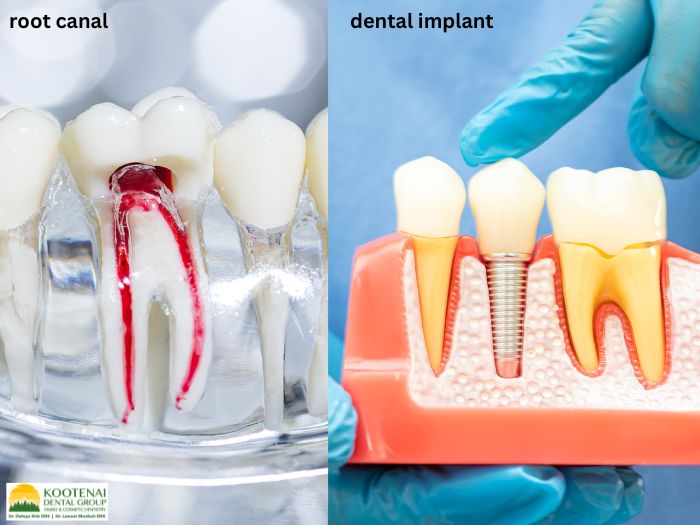
Comparing dental implants vs. root canals
To help you decide between these two options, let’s compare them based on key factors:
Longevity and durability
Dental implants have the upper edge when it comes to durability. With proper care—including regular brushing, flossing, and dental checkups—implants can last 20 years or more.
In contrast, while root canals can also last many years, they may require retreatment after 10–15 years.
Cost considerations
Root canals are initially more affordable than dental implants; however, long-term costs should be considered as well. If retreatments or additional restorations (like crowns) are needed over time, these expenses can add up.
Implants may have higher upfront costs but often prove more cost-effective in the long run due to their durability.
Impact on oral health
Dental implants help maintain jawbone health by stimulating bone growth around the implant site. Root canals, on the other hand, don’t address bone loss since they only treat the infected tooth.
Which option is healthier: dental implants or root canals?
While both options are effective, dental implants stand out as the healthiest option over time due to:
1. Their ability to preserve jawbone structure and facial features. Dental implants mimic natural tooth roots by stimulating the jawbone, which promotes bone growth and prevents resorption. This helps maintain facial structure and prevents the sunken appearance that often accompanies tooth loss.
2. The implant’s ability to create a stable and bacteria-resistant environment, helps protect against infections that could otherwise spread to adjacent teeth or gums.
On the other hand, bacteria from an incompletely treated root canal can migrate into the gums, leading to swelling, redness, and abscess formation. Chronic infections beneath the root can erode the surrounding jawbone over time, weakening its structure and potentially leading to tooth loss and systemic conditions like cardiovascular disease and diabetes due to chronic inflammation.
3. They maintain the surrounding teeth in place. By filling the gap left by a missing tooth, they prevent neighboring teeth from shifting or tilting into the space, which can otherwise lead to misalignment and bite problems.
4. They protect patients from future oral health issues such as reducing the risk of gum recession.
5. They’re the most durable option. Dental implants have an exceptionally high success rate —up to 98%— and with proper care and maintenance, they can last a lifetime.
If you’re weighing your options between a root canal and a dental implant, the long-term health benefits of dental implants make them the ideal choice for most patients. From preserving jawbone structure to preventing future oral complications, implants provide a durable and effective solution that supports your overall well-being.
To take the next step forward in your dental health, schedule your free consultation at Kootenai Dental Group in Coeur d’Alene, ID! With a proven track record of successful implant procedures and a commitment to patient care, Dr. Delwyn Dick, DDS offers the expertise and reliability you need to confidently restore your smile.
Call us at 208-762-8750 today!
Frequently Asked Questions
What hurts more, a root canal or a dental implant?
Both procedures involve some level of discomfort; however, with modern anesthesia, we can ensure that pain during any dental treatment is minimal.
How do I know which option is right for me?
Deciding between a root canal and a dental implant is not something you need to figure out on your own. The best way to determine the right option is by scheduling a consultation with us in which we will be able to evaluate your dental health, budget, and long-term goals.
During your visit, Dr.Delwyn Dick, DDS will assess the condition of your tooth, the health of your gums and jawbone, and other factors like your overall oral hygiene and lifestyle. We will also discuss your needs and preferences in order to help guide you toward the choice that aligns with your health and priorities.
Can I avoid these treatments altogether?
Prevention is critical for reducing your risk of severe dental decay, but once a tooth is compromised, treatment is necessary to protect your overall oral health and well-being.
A damaged tooth—whether due to decay, infection, or trauma—won’t heal on its own. Ignoring the issue can lead to more severe problems, such as infections spreading to surrounding teeth, gum disease, or even bone loss in the jaw.
As for preventative care, brushing twice daily, flossing regularly, eating a balanced diet low in sugar, and visiting your dentist for routine checkups can prevent infections that require these treatments.
Should I redo my root canal or get an implant?
While the choice depends on your specific circumstances and needs, if you’re looking for a long-term fix that supports your overall oral health, a dental implant is oftentimes the best option.
A root canal retreatment can address reinfection temporarily, but it doesn’t resolve underlying issues like weakened tooth structure or the possibility of future failures.
A dental implant offers a permanent solution by replacing the compromised tooth entirely thereby eliminating the risk of reinfection or decay.