




Dental implants are artificial tooth roots, usually made from titanium, that are inserted into the jawbone to provide a strong foundation for bridges and artificial teeth. The crown, which is placed above the implant, is customized to match your natural teeth perfectly for a seamless appearance.
While dental implants offer numerous benefits, including improved appearance, speech, and comfort, maintaining their cleanliness is crucial for their longevity and overall oral health.
The good news is that dental implants are not hard to keep clean. In fact, caring for them is similar to caring for natural teeth.
In this article, we will discuss the steps to properly clean implants, highlight some of the products we recommend, and answer common questions.
How to clean dental implants
Cleaning dental implants is essential for maintaining oral health and ensuring the longevity of your implants. Even though the process is much like taking care of natural teeth, there are some specific techniques and tools that implants require.
The following four steps are important:
1. Brushing
Brush at least twice daily, ideally after each meal, to remove food particles and plaque.
Use a soft-bristled toothbrush to avoid damaging the implant surface or irritating the surrounding gum tissue. Opt for a non-abrasive toothpaste to prevent scratching the implant or crown.
To clean the implant surface, place your toothbrush at a 45° angle against your gum line. Gently brush using small circular motions.
2. Flossing
Flossing is equally important for making sure your implants are cleaned effectively. We recommend using specialized implant floss, which is thicker and more flexible than traditional floss. However, if traditional floss is all you have, that is better than nothing.
Gently slide the floss between the teeth and around the implant, forming a C-shape to wrap around each side. The key is to reach all sides of the implant, including the areas where it meets the gum line. Floss helps remove plaque and food debris that brushing alone might miss.
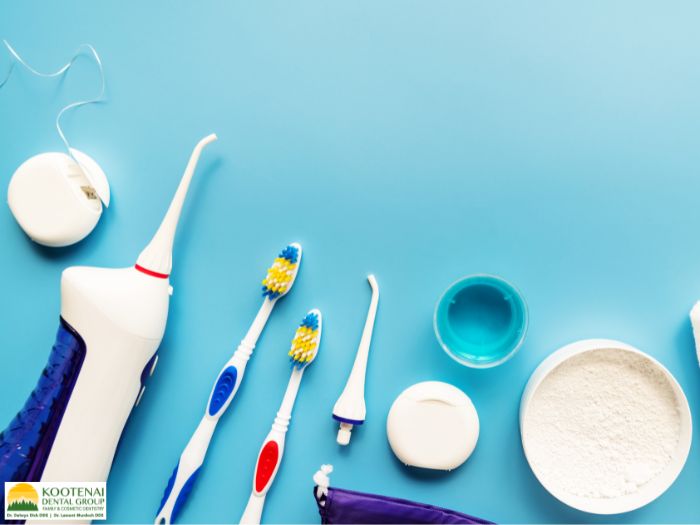
3. Interdental cleaning
There are two main options for interdental cleaning: interdental brushes and water flossers.
Interdental brushes are small, specially designed brushes that can effectively clean between teeth and around dental implants. For implant care, it’s highly recommended to use interdental brushes with a plastic coating over the wire. This coating prevents scratching or damaging the implant surface.
To use, gently insert the brush between teeth or implants and move it back and forth a few times. Rinse the brush after each use.
Water flossers, otherwise known as oral irrigators, are beneficial for complex cases or for those who find traditional flossing challenging. These devices use a stream of pulsating water to remove plaque and food debris from between teeth and around implants.
4. Rinsing
Rinsing with an antibacterial mouthwash is the final step in the cleaning routine. This helps ensure that all the remaining bacteria are killed and leaves you with fresh breath.
Choose an alcohol-free mouthwash to avoid irritating the gum tissue around the implant. For implants, we recommend using a chlohexidine mouthwash.
To rinse properly, swish the mouthwash around your mouth for at least 30 seconds, making sure it reaches all the areas including around the implants.
If you’ve recently gotten implants, a special mouthwash may be recommended that will help speed up the healing of the mouth and gum tissue.
How often should I visit a dentist for professional cleaning of dental implants?
While daily home care is crucial for maintaining your dental implants, regular professional cleanings and check-ups are equally important.
These visits allow your dentist to monitor the health of your implants and surrounding tissues, catch potential issues early, and provide a thorough cleaning that goes beyond what you can achieve at home.
Frequency of dental visits
In the months following implant placement, you may need more frequent visits to ensure proper healing and integration of the implant.
Once your implants are stable and fully healed, visits every 3-6 months are typically recommended, however, the frequency of visits can vary based on individual needs.
At Kootenai Dental Group in Coeur d’Alene, ID, Dr. Delwyn Dick, DDS, and Dr. Miranda Anderson, DDS, will create a personalized schedule for you based on factors such as your overall oral health, the number and location of your implants, your ability to maintain good oral hygiene at home, and any pre-existing health conditions that might affect your implants.
Frequently Asked Questions
How often should dental implants be cleaned?
Dental implants should be cleaned at least twice daily at home, just like natural teeth. Professional cleaning by a cosmetic dentist is recommended every 3-6 months, depending on individual needs and oral health status.
What dissolves plaque on dental implants?
Regular brushing with non-abrasive toothpaste and daily flossing help dissolve plaque on dental implants. Antimicrobial mouthwashes can also help to break down plaque. For more stubborn buildup and in-depth plaque removal, professional cleaning is required.
Does food get under all-on-4 implants?
Yes, food can get under all-on-4 implants, especially in the space between the gums and the prosthesis. This makes thorough cleaning crucial. Tools like floss threaders, interdental brushes, or water flossers are necessary for removing trapped food particles.
How do I keep my dental implants from getting infected?
Proper oral hygiene is the key to preventing infections in dental implants. This includes daily brushing and flossing, using interdental cleaning tools, rinsing with antimicrobial mouthwash, and attending regular professional cleanings. It’s also important to address any signs of gum inflammation promptly.
Do dental implants have to be removed to clean?
No, dental implants do not need to be removed for cleaning as they are permanently fixed in the jawbone. They can and should be cleaned in place, just like natural teeth.
Can dental implants fail if not properly cleaned?
Yes, inadequate cleaning and poor oral hygiene can lead to implant failure and infections like peri-implantitis.
Bottom line
Dental implants are the best solution for missing teeth, offering a natural appearance and functionality that can last a lifetime with proper care. While implant care requires specific techniques, it’s not significantly more challenging than taking care of natural teeth.
Your dental implants are not just an investment in your oral health but also in your quality of life.
By incorporating the care techniques we’ve discussed into your daily routine, using the appropriate tools, and getting regular checkups and cleanings at our dental office, you can rest assured that your dental implants will remain healthy, effective, and aesthetically pleasing for many years to come.
If you experience any discomfort, pain, swelling, or looseness around the implant, contact us right away so these issues can be addressed promptly. Early intervention can prevent minor problems from escalating into major complications that could threaten the implant’s stability.
Take the first step towards your new smile by scheduling a consultation with our expert team at Kootenai Dental Group in Coeur d’Alene, ID.
During your visit, you’ll have the chance to discuss your specific needs and smile goals, get answers to all your questions about dental implants, and receive a personalized treatment plan tailored just for you
Call 208-762-8750 today to book your free consultation!